Category: Artificial intelligence

  • Understanding the Random Forest Algorithm: A Powerful Machine Learning Technique

    Random Forest is one of the most powerful and widely used machine learning algorithms. Known for its accuracy, versatility, and robustness, it is an ensemble learning method that builds multiple decision trees and combines their outputs to improve performance. In this article, we’ll break down how Random Forest works, its advantages, disadvantages, a comparison with decision trees, and when to use it in real-world applications.

    What is the Random Forest Algorithm?

    Random Forest is an ensemble learning method that constructs multiple decision trees and aggregates their results to enhance accuracy and minimize overfitting. It can be used for both classification and regression tasks.

    How Does It Work?

    1. Bootstrap Sampling (Bagging):
      • The algorithm randomly selects subsets of the training data (with replacement).
      • Each subset is used to train an individual decision tree.
    2. Feature Randomness:
      • Instead of considering all features, Random Forest selects a random subset of features at each split.
      • This ensures diverse trees, improving generalization.
    3. Majority Voting (Classification) / Averaging (Regression):
      • For classification, the final prediction is based on majority voting across all trees.
      • For regression, it takes the average of predictions from all trees.

    Advantages of Random Forest

    Reduces Overfitting: Unlike individual decision trees, Random Forest generalizes well to unseen data.
    Handles Missing Data: It can handle missing values and maintain good performance.
    Works Well with Large Datasets: Scales efficiently with high-dimensional data.
    Can Handle Both Categorical and Numerical Data: Flexible for various ML tasks.
    Feature Importance: Provides insights into which features are most significant.


    Disadvantages of Random Forest

    Computationally Expensive: Training a large number of trees requires more time and resources.
    Less Interpretability: Unlike a single decision tree, the results of Random Forest are not easily interpretable.
    Slower Predictions: Since multiple trees contribute to the final prediction, inference time is higher compared to a single decision tree.
    Memory Intensive: Requires more storage and RAM due to multiple trees being stored in memory.


    Comparison: Random Forest vs. Decision Tree

    FeatureDecision TreeRandom Forest
    ComplexitySimple and easy to interpretMore complex and less interpretable
    OverfittingProne to overfittingReduces overfitting significantly
    Computation SpeedFaster training and inferenceSlower due to multiple trees
    AccuracyCan be less accurate on complex dataHigher accuracy due to ensemble
    InterpretabilityEasy to understandHarder to interpret due to multiple trees
    ScalabilitySuitable for small datasetsWorks well with large datasets
    Memory UsageLowHigh due to multiple trees

    When Should You Use Random Forest?

    Random Forest is a powerful algorithm applicable to various industries and problem domains, including:

    🔹 Predicting customer churn – Helps businesses retain customers by identifying risk factors.
    🔹 Fraud detection in finance – Recognizes fraudulent transactions with high accuracy.
    🔹 Medical diagnosis & disease prediction – Assists in detecting conditions based on medical data.
    🔹 Stock market prediction – Analyzes past data trends to forecast stock movements.
    🔹 Image classification & object detection – Enhances accuracy in computer vision tasks.


    Implementing Random Forest in Python

    Using scikit-learn, you can quickly build and train a Random Forest model:

    from sklearn.ensemble import RandomForestClassifier
    from sklearn.datasets import load_iris
    from sklearn.model_selection import train_test_split
    from sklearn.metrics import accuracy_score
    
    # Load dataset
    data = load_iris()
    X_train, X_test, y_train, y_test = train_test_split(data.data, data.target, test_size=0.2, random_state=42)
    
    # Train the model
    model = RandomForestClassifier(n_estimators=100, random_state=42)
    model.fit(X_train, y_train)
    
    # Make predictions
    y_pred = model.predict(X_test)
    
    # Evaluate accuracy
    print("Accuracy:", accuracy_score(y_test, y_pred))

    Final Thoughts

    Random Forest is an excellent choice for many real-world problems due to its high accuracy, resilience to overfitting, and ability to handle diverse data types. However, it can be computationally expensive and less interpretable compared to a single decision tree. Whether you’re working on classification or regression, this algorithm provides reliable results and interpretability.

    🚀 Want to dive deeper into AI and machine learning?
    Enroll in our Comprehensive AI Course and master industry-leading techniques today!

    📌 Stay updated with the latest in AI and data science by following our blog!
    MachineLearning #RandomForest #AI #DataScience

  • Hands-on Guide to Simulating Quantum Systems and Integrating AI

    Introduction

    Quantum systems exhibit properties like superposition and entanglement, which can be simulated using quantum computing frameworks. AI can enhance quantum simulations by optimizing circuits, predicting quantum states, and improving error correction.

    Tools Required

    • Quantum Computing Frameworks:
      • IBM Qiskit (Python-based)
      • Google Cirq
      • Microsoft Q#
    • AI Libraries:
      • TensorFlow / PyTorch (for deep learning)
      • Scikit-learn (for classical ML models)
      • Quantum Machine Learning (QML) libraries like PennyLane

    Setting Up the Environment

    pip install qiskit pennylane tensorflow numpy matplotlib

    Simulating a Quantum System

    Example: Simulating a 2-Qubit System in Qiskit

    from qiskit import QuantumCircuit, Aer, transpile, assemble, execute
    import numpy as np
    import matplotlib.pyplot as plt
    
    # Create a quantum circuit with 2 qubits
    qc = QuantumCircuit(2)
    
    # Apply a Hadamard gate to create superposition
    qc.h(0)
    
    # Apply a CNOT gate for entanglement
    qc.cx(0, 1)
    
    # Visualize the circuit
    qc.draw('mpl')
    plt.show()
    
    # Simulate the quantum circuit
    simulator = Aer.get_backend('statevector_simulator')
    compiled_circuit = transpile(qc, simulator)
    job = execute(compiled_circuit, simulator)
    result = job.result()
    
    # Get state vector
    statevector = result.get_statevector()
    print("Quantum State Vector:", statevector)

    Integrating AI with Quantum Simulation

    Using a Neural Network to Predict Quantum States

    import tensorflow as tf
    from tensorflow.keras.models import Sequential
    from tensorflow.keras.layers import Dense
    
    # Generate training data: quantum states and their measurements
    X_train = np.random.rand(1000, 2)  # Random quantum states
    Y_train = np.sin(np.pi * X_train)  # Simulated measurements
    
    # Define a simple neural network
    model = Sequential([
        Dense(10, activation='relu', input_shape=(2,)),
        Dense(10, activation='relu'),
        Dense(2, activation='linear')
    ])
    
    # Compile and train the model
    model.compile(optimizer='adam', loss='mse')
    model.fit(X_train, Y_train, epochs=50, batch_size=32)
    
    # Predict quantum measurements for new states
    X_test = np.random.rand(10, 2)
    predictions = model.predict(X_test)
    print("Predicted Quantum Measurements:", predictions)

    Expanding to Real-World Applications

    • Quantum Machine Learning (QML): Train AI models on quantum-generated datasets.
    • Hybrid Quantum-Classical AI: Combine classical deep learning with quantum feature selection.
    • Optimization Problems: Use quantum annealing for AI-based optimization.

    Conclusion

    Simulating quantum systems with Qiskit and integrating AI enables innovative solutions in quantum computing. Further exploration can include Variational Quantum Circuits (VQCs) and hybrid AI-quantum models.

  • Mathematical Models and Computational Thinking: The Future of Intelligent Solutions

    Mathematical modeling and computational thinking are essential components of modern problem-solving, especially in fields like data science, engineering, economics, and artificial intelligence. These two concepts, although distinct, are interconnected and can help us analyze complex problems, design solutions, and make informed decisions.

    In this article, we will explore the fundamentals of mathematical modeling and computational thinking, discuss their applications, and highlight how they are used together to solve real-world problems.

    What is Mathematical Modeling?

    Mathematical modeling is the process of representing real-world phenomena using mathematical structures and concepts. It involves formulating a mathematical equation or system that approximates a real-world situation, allowing us to analyze, predict, and optimize various scenarios.

    Key Elements of Mathematical Modeling:

    1. Problem Definition: The first step in mathematical modeling is clearly defining the problem. This could involve understanding the physical or economic system that needs to be modeled, identifying the variables, and determining the constraints.

    2. Mathematical Representation: Once the problem is defined, the next step is to represent it mathematically. This might involve equations, graphs, matrices, or other mathematical tools that capture the relationships between variables.

    3. Model Analysis: After creating the model, it’s important to analyze the behavior of the model. This could involve solving equations, simulations, or sensitivity analysis to understand how changes in input parameters affect the system.

    4. Validation and Refinement: Mathematical models are often based on approximations and assumptions. It’s essential to validate the model against real-world data to ensure its accuracy. If discrepancies are found, the model may need to be refined or adjusted.

    Example of Mathematical Modeling:

    In the field of epidemiology, mathematical models like the SIR model (Susceptible, Infected, Recovered) are used to predict the spread of infectious diseases. These models rely on differential equations to describe the dynamics of disease transmission.

    What is Computational Thinking?

    Computational thinking is a problem-solving approach that involves breaking down complex problems into simpler, more manageable tasks. It is not limited to programming or computer science but is a mindset that can be applied to a wide range of disciplines.

    Key Concepts of Computational Thinking:

    1. Decomposition: Breaking down a complex problem into smaller, manageable sub-problems. This is the first step in both computational thinking and mathematical modeling. For example, when solving a problem involving traffic congestion, one might break it down into individual factors such as vehicle flow, traffic light timing, and road capacity.

    2. Pattern Recognition: Identifying patterns and trends within data or problem structures. By recognizing recurring patterns, we can predict outcomes and generalize solutions. For example, pattern recognition is key in machine learning, where algorithms learn from historical data to make predictions.

    3. Abstraction: Focusing on essential features and ignoring irrelevant details. In mathematical modeling, abstraction allows us to simplify complex real-world scenarios by concentrating on the most important variables and relationships.

    4. Algorithm Design: Developing step-by-step instructions to solve the problem. Algorithms form the backbone of computational thinking, whether in the form of sorting algorithms in programming or procedures for analyzing data.

    Example of Computational Thinking:

    In the development of a recommendation system for movies, computational thinking might involve:

    • Decomposition: Breaking down the problem into components like user preferences, movie attributes, and the recommendation algorithm.

    • Pattern Recognition: Identifying user behavior patterns to predict future preferences.

    • Abstraction: Creating simplified models of user preferences and movie characteristics.

    • Algorithm Design: Developing an algorithm to recommend movies based on the identified patterns.

    Mathematical Modeling and Computational Thinking in Action

    When combined, mathematical modeling and computational thinking provide a powerful toolkit for solving real-world problems. Mathematical models offer a structured way to represent complex systems, while computational thinking provides the methods and strategies to work with these models efficiently.

    Real-World Application: Climate Change Prediction

    1. Problem Definition: Understanding the impact of various factors (e.g., CO2 emissions, temperature, ice cap melting) on global climate change.

    2. Mathematical Representation: Using differential equations to represent the relationships between these factors, and incorporating statistical models to analyze climate data.

    3. Model Analysis: Solving the mathematical model to predict future climate conditions based on different emission scenarios.

    4. Computational Thinking: Decomposing the problem into smaller sub-problems, recognizing patterns in historical climate data, abstracting essential climate variables, and designing algorithms to simulate the models and predict future trends.

    By using these techniques together, climate scientists can make informed predictions about the future and devise strategies to mitigate the effects of climate change.

    Why are Mathematical Modeling and Computational Thinking Important?

    1. Problem Solving in Complex Domains: Whether it’s designing a self-driving car, predicting stock prices, or optimizing supply chains, these techniques are crucial for tackling complex, multi-variable problems in various industries.

    2. Data-Driven Decision Making: Mathematical modeling and computational thinking are essential for data analysis. They help in making sense of large datasets, detecting trends, and drawing conclusions.

    3. Innovation and Optimization: These methods enable us to design innovative solutions and optimize processes. For example, in healthcare, computational thinking and mathematical models are used to develop personalized treatment plans for patients.

    Conclusion

    Mathematical modeling and computational thinking are foundational skills for understanding and solving problems in the modern world. They allow us to represent real-world systems mathematically, break down complex tasks into manageable components, and use algorithms to find solutions. Whether you’re working in artificial intelligence, economics, engineering, or any other field, these techniques will help you make informed decisions and create impactful solutions.

    Incorporating both mathematical modeling and computational thinking into your problem-solving approach will not only help you solve problems more effectively but also prepare you for the future of innovation and technology.engineering, economics, and artificial intelligence. These two concepts, although distinct, are interconnected and can help us analyse complex problems, design solutions, and make informed decisions.

  • The Fusion of Quantum Computing and AI: A New Era of Innovation

    The Fusion of Quantum Computing and AI: A New Era of Innovation

    The convergence of Quantum Computing (QC) and Artificial Intelligence (AI) is ushering in a new era of technological breakthroughs. By combining the unparalleled processing power of quantum computers with AI’s ability to learn and adapt, researchers are addressing some of the most complex challenges in science, technology, and society. This article explores the basics of quantum computing, its role in enhancing AI, applications across industries, challenges, and the ethical dimensions of this transformative synergy.

    What is Quantum Computing?

    Quantum computing is a revolutionary technology that uses the principles of quantum mechanics to perform calculations far beyond the capabilities of classical computers. Key concepts include:

    • Qubits: The basic units of quantum information, which, unlike classical bits (0 or 1), can exist in a state of superposition (both 0 and 1 simultaneously).
    • Entanglement: A phenomenon where qubits become interconnected, so the state of one directly influences the state of another, regardless of distance.
    • Quantum Speedup: Quantum algorithms can solve certain problems exponentially faster than classical methods.

    For tasks like optimisation, large-scale simulations, and pattern recognition, this computational power is game-changing.

    How AI and Quantum Computing Complement Each Other?

    AI is driven by the ability to process vast amounts of data and find patterns. Traditional computing often struggles with these tasks due to their sheer complexity. Quantum computing enhances AI in key ways:

    • Faster Model Training: Machine learning models, particularly in deep learning, require immense computational resources to train. Quantum computers can reduce this time significantly.
    • Better Optimisation: Many AI problems involve optimisation, such as finding the best route for logistics or minimising error in predictions. Quantum optimisation algorithms (e.g., QAOA) provide faster and more accurate solutions.
    • Efficient Data Processing: Quantum computers can handle high-dimensional data and complex computations simultaneously, improving AI’s ability to process and interpret data.
    • Enhanced Creativity: Quantum systems generate unique data patterns that can feed into generative AI models, improving applications like art creation and drug discovery.

    Key Areas of Quantum-AI Integration

    Quantum Machine Learning (QML)

    Quantum Machine Learning combines quantum computing with traditional machine learning to solve complex problems faster and more effectively. Examples include:

    • Quantum Neural Networks (QNNs): Use quantum operations to build neural networks that simulate complex data patterns.
    • Quantum Support Vector Machines (QSVMs): Speed up tasks like classification and clustering in large datasets.
    • Quantum PCA (Principal Component Analysis): Enables faster dimensionality reduction for datasets with millions of variables.

    Natural Language Processing (NLP)

    NLP tasks like sentiment analysis, translation, and chatbots often require massive computations. Quantum NLP speeds up matrix operations, enabling real-time language modeling with larger datasets.

    Reinforcement Learning

    Reinforcement learning is crucial in areas like robotics, self-driving cars, and game development. Quantum reinforcement learning can evaluate multiple actions simultaneously, accelerating decision-making processes.

    Quantum-Assisted Computer Vision

    Quantum computing enhances AI’s ability to process visual data, improving applications like medical imaging, object detection, and facial recognition.

    Real-World Applications

    The combination of quantum computing and AI is already showing promise in various fields:

    1. Healthcare:
      • Quantum-enhanced AI speeds up drug discovery by analyzing complex molecular interactions.
      • Helps optimise treatment plans tailored to individual patients through predictive modeling.
    2. Finance:
      • Detects fraud more accurately by analysing large transaction datasets in real-time.
      • Optimises investment portfolios by evaluating multiple market scenarios simultaneously.
    3. Energy:
      • Improves power grid management and identifies new materials for sustainable energy solutions.
      • Enhances weather prediction models to mitigate climate risks.
    4. Autonomous Vehicles:
      • Processes real-time sensor data more efficiently for navigation and obstacle detection.
      • Optimises routes dynamically to save time and energy.

    Challenges in Combining Quantum Computing and AI

    Despite the potential, there are significant challenges to integrating quantum computing with AI:

    • Hardware Limitations: Quantum computers are still in their infancy. Issues like qubit stability and error correction (decoherence) limit their practical usability.
    • Algorithm Development: While promising, quantum algorithms for AI are still in the experimental phase. Many require further refinement to become efficient and scalable.
    • Cost Barriers: Building and maintaining quantum systems is expensive, making access limited to a few organisations.
    • Talent Shortage: There’s a lack of professionals with expertise in both quantum computing and AI, slowing progress in this interdisciplinary field.

    Ethical Considerations

    The integration of quantum computing and AI raises profound ethical questions:

    • Data Security: Quantum computers could potentially break existing encryption methods, putting sensitive data at risk.
    • Bias and Fairness: AI models powered by quantum computing could still carry biases from their training data, amplifying societal inequalities.
    • Regulatory Frameworks: Governments and organisations must establish guidelines to ensure these technologies are used responsibly and ethically.

    Future Trends in Quantum-AI

    Looking ahead, several exciting developments are on the horizon:

    • Cloud-Based Quantum Services: Companies like IBM, Google, and Amazon are democratising access to quantum computing through cloud platforms. This will accelerate research in quantum-AI.
    • Cross-Disciplinary Innovation: Increased collaboration between quantum physicists, AI researchers, and data scientists will drive breakthroughs.
    • Quantum-AI Edge Computing: Combining quantum computing with Internet of Things (IoT) devices could enable real-time applications in fields like healthcare monitoring and smart cities.

    Conclusion

    The convergence of quantum computing and AI is not just a technological evolution—it’s a revolution. By unlocking new levels of computational power and intelligence, these technologies have the potential to redefine industries, solve global challenges, and improve lives. However, careful attention to ethical implications and sustained research investment will be crucial to harness their full potential.

    Are you excited about the future of quantum computing and AI? Share your thoughts and insights on how this powerful combination can shape our world!

    Related posts

  • Large Language Models Explained: Key Concepts and Applications

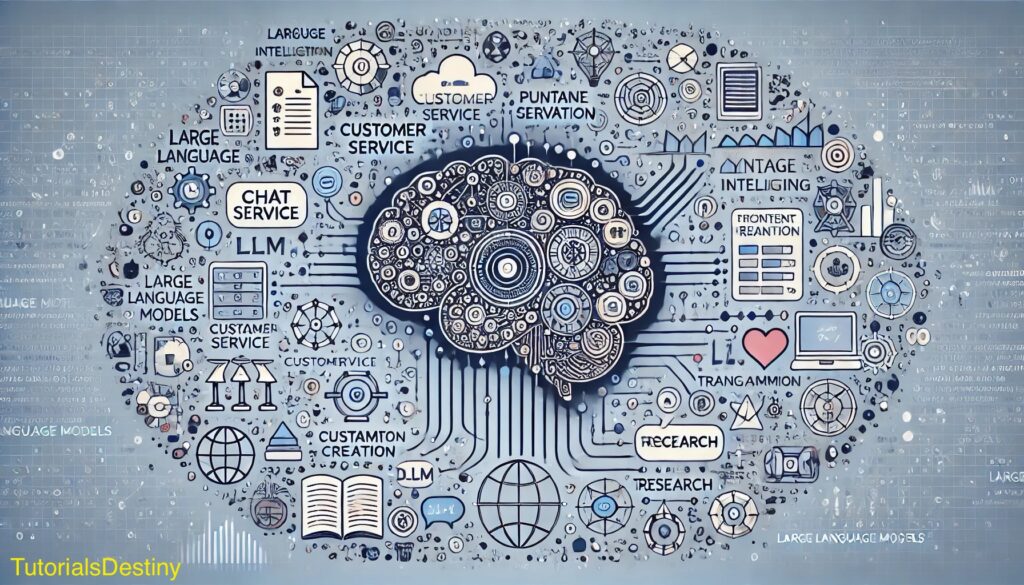
    Introduction to Large Language Models

    Large Language Models (LLMs) are advanced artificial intelligence systems designed to understand and generate human language. These models are trained on vast datasets, enabling them to answer questions, write essays, translate languages, and even generate creative content. From OpenAI’s GPT series to Google’s BERT and beyond, LLMs are revolutionizing how we interact with technology.

    What is a Language Model?

    A language model (LM) is a type of AI model that processes and generates human language. Traditionally, language models were limited to simpler tasks like word prediction, but with the growth in computational power and data availability, they’ve evolved into powerful tools. LLMs can process and generate text based on the patterns learned from their training data.

    The “Large” in Large Language Models

    The “large” in LLMs refers to the model’s size, specifically the number of parameters—a model’s internal weights and biases that are learned during training. For instance:

    • BERT by Google has 340 million parameters.

    • GPT-3 by OpenAI has 175 billion parameters.

    • GPT-4 has an even larger number, although OpenAI hasn’t disclosed the exact count.

    This increase in parameters helps the model recognize complex language structures, idiomatic expressions, and context at a very high level.

    How Are Large Language Models Trained?

    The training of LLMs involves two main steps:

    • Data Collection: LLMs are trained on large datasets consisting of text from books, websites, articles, and other sources. This diverse data enables the model to understand a wide range of topics.

    • Learning Patterns: During training, the model learns patterns in the data through a process called “backpropagation,” which adjusts the model’s parameters to minimize errors in predictions.

    The models are then “fine-tuned” to specialize in specific tasks or domains (e.g., customer service, legal assistance).

    Architecture of Large Language Models

    Most LLMs are based on a type of neural network architecture called a transformer.
    Key features of transformers include:

    • Self-Attention: This allows the model to weigh the importance of each word in a sentence relative to others, giving it the ability to capture context effectively.

    • Layers and Multi-Head Attention: LLMs have multiple layers (like neurons in the human brain) that each capture different levels of language complexity, from basic grammar to nuanced semantics.

    Applications of Large Language Models

    LLMs have a wide array of applications:

    • Content Generation: Writing articles, stories, or social media posts.

    • Customer Service: Assisting with FAQs or even handling chatbots.

    • Programming Assistance: Generating code or debugging.

    • Language Translation: Converting text from one language to another.

    • Medical and Legal Research: Summarising research papers or legal documents.

    Limitations of Large Language Models

    Despite their capabilities, LLMs have limitations:

    • Data Bias: Since they learn from existing data, LLMs can inadvertently adopt biases present in the training data.

    • Lack of Real Understanding: LLMs don’t truly understand language; they’re statistical models predicting likely word sequences.

    • High Computational Cost: Training and deploying LLMs require immense computational resources, making them costly to develop and maintain.

    Ethical and Privacy Concerns

    With their power comes the responsibility to use LLMs ethically:

    • Privacy: Models trained on publicly available data may inadvertently learn private information.

    • Misinformation: The ability to generate text on any topic means LLMs could potentially spread misinformation.

    • Job Impact: LLMs could replace certain job functions, particularly those based on routine language processing.

    The Future of Large Language Models

    Looking forward, we expect several advancements:

    • Greater Efficiency: Smaller, more efficient models are being developed to bring LLM capabilities to everyday devices.

    • Better Alignment: Researchers are improving techniques to align LLMs more closely with human values and ethical guidelines.

    • Interdisciplinary Applications: LLMs may become integral in fields like education, healthcare, and law, assisting professionals with decision-making and analysis.

    Conclusion

    Large Language Models represent a significant leap in the field of artificial intelligence. By understanding how they work, their applications, and their limitations, we can better appreciate their impact on society and responsibly leverage their power. Whether you’re an AI enthusiast, a developer, or just curious, LLMs offer a glimpse into the future of human-computer interaction.

    This post gives an overview of what LLMs are, how they work, their applications, and challenges, and where the field might be heading. Let me know if you need any adjustments!

    Start a Free course on Artificial Intelligence Start Course

  • The Wonders of Artificial Intelligence: Explore The World of AI

    Artificial Intelligence

    To understand Artificial Intelligence (AI), first we will discuss the concept of intelligence. Knowledge and intelligence are two different things; knowledge means to know, whereas intelligence is the application of knowledge to solve problems using algorithms.

    The word ‘Artificial’ in the term Artificial Intelligence refers to something created by humans, as opposed to natural intelligence. AI is intelligence exhibited by machines. It mimics cognitive functions like learning and problem-solving, typically associated with human intelligence.

    Some notable examples of AI applications include advanced search engine algorithms like Google, Natural Language Processing (NLP) technologies such as Siri and Alexa, and self-driving vehicles that are transforming the automotive industry.

    Types Of Artificial Intelligence

    • Weak or Narrow Artificial Intelligence: AI designed for specific tasks, like self-driving cars and voice assistants (Siri, Alexa), falls under this category. It’s the most common form of AI in use today, particularly in automation and customer service applications.
    • Artificial General Intelligence (AGI): AGI refers to the theoretical concept of AI systems possessing human-like cognitive abilities across multiple domains. It remains a future goal for AI researchers.

    Wonders Of Artificial Intelligence

    • Automation: AI is capable of automating repetitive tasks, leading to increased business productivity and cost savings. Examples include AI-driven manufacturing processes and customer support systems.
    • AI-Powered Accessibility: AI improves accessibility for people with disabilities, such as through real-time translation or tools that assist individuals with visual impairments.
    • AI in Transportation: AI optimizes traffic systems and powers autonomous vehicles, enhancing both public safety and transportation efficiency.
    • Natural Language Processing (NLP): NLP allows machines to understand and generate human language, powering virtual assistants like Siri and Alexa, along with AI-driven chatbots used in customer support.
    • Healthcare Advancements: AI is revolutionizing healthcare by assisting in diagnostics, personalizing treatment plans, and predicting patient outcomes. It also aids in analyzing medical images and performing surgeries with precision.
    • Enhanced Creativity: AI is contributing to the creation of artificial art, music generation, and literature. Tools like DALL-E and GPT-4 generate creative outputs from simple prompts.
    • Predictive Analytics: AI helps businesses by analyzing large data sets to predict future trends, optimize decision-making, and streamline supply chain management.

    Challenges and Concerns of AI

    • Job Automation: The rise of AI automation poses threats to low-skilled jobs, with AI outperforming humans in repetitive tasks, resulting in widespread job displacement.
    • Loss of Human Skills: Relying too heavily on AI could lead to a decline in human creativity and decision-making abilities.
    • Environmental Impact: The energy demands of large AI models and data centers can negatively impact the environment, contributing to climate change.
    • Misinformation: AI tools can be used to create deepfakes and spread misinformation, which can undermine public trust and destabilize democratic systems.
    • AI Arms Race: The development of AI-powered autonomous weapons raises ethical and security concerns. The race to develop these technologies may have far-reaching consequences for global security.

    Machine learning vs Deep learning

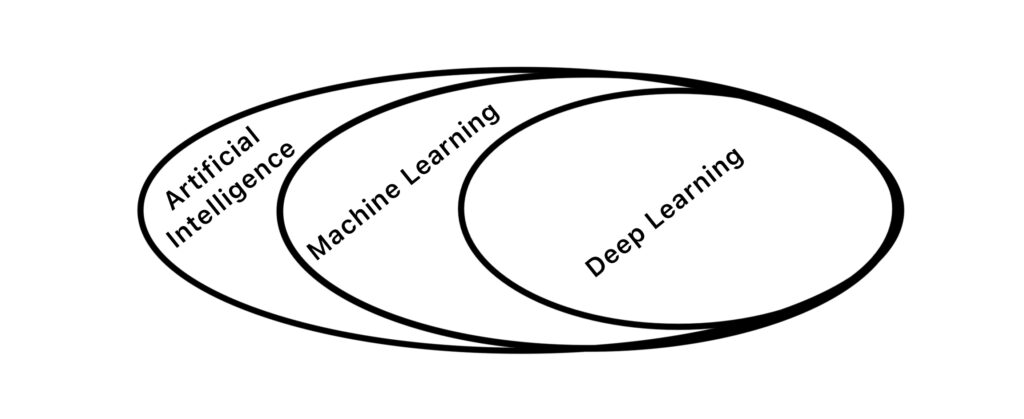
    Deep learning and machine learning both falls under the umbrella of Artificial Intelligence, but they represent distinct approaches to train AI systems. The primary distinction lies in their training data, machine learning typically relies on smaller, structured datasets, whereas deep learning leverages larger, unstructured datasets.

    Machine learning enable computers to learn from and make predictions or decisions based on data. Wheras Deep learning utilizes deep neural networks, which are algorithms inspired by the structure of the human brain. These networks have many layers, allowing them to automatically learn representations of data.

    Machine Learning Deep Learning
    It uses various algorithms like Decision Trees, k-Nearest Neighbors etc.It primarily uses Deep Neural Networks (DNNs)
    It requires manual selection and engineering of features.It automatically learns relevant features from raw unstructured data.
    ML relies on structured data.Capable of handling unstructured and high-dimensional data effectively.
    Many ML models are interpretable.DL models are less interpretable due to their complex neural network.
    It generally reuires less computational resourcesRequires significant computational resources
    It is generally trained on smaller datasets.Large unstructured dataset is required to train such complex models
    Its area of application includes finance, healthcare, marketing and more.It is particularly powerful in tasks like image and speech recognition, natural language processing, and autonomous systems

    Ethical considerations

    AI ethical considerations encompass a set of principles and guidelines that guide the development, deployment, and use of artificial intelligence technologies in a responsible and morally sound manner. These considerations aim to address potential societal, legal, and individual impacts of AI systems. Key aspects of AI ethical considerations includes the following:

    • Transparency
    • Fairness and bias
    • Accountability
    • Safety
    • Privacy
    • Human-Centric Design
    • Inclusivity
    • Regulatory Compliance

    By prioritizing these ethical considerations, developers can contribute to the responsible and sustainable growth of AI technologies, fostering trust among users and addressing societal concerns.

    Start a Free course on Artificial Intelligence

    from Basics to Advance level