Tag: AI

  • Data Analyst vs Data Scientist vs ML Engineer: A Strategic Career Breakdown

    A Practical, Real-World Breakdown for Aspiring Data Professionals

    In today’s data-driven economy, job titles such as Data AnalystData Scientist, and Machine Learning (ML) Engineer are often used interchangeably. However, in practice, these roles differ significantly in objectives, skill requirements, tooling, and business impact.

    Understanding these distinctions is critical—especially if you are beginning your journey in data science. Choosing the right path depends on your interests: Do you enjoy storytelling and dashboards? Mathematical modeling? Or engineering production-grade AI systems?

    This article provides a structured, real-world comparison across:

    • Core responsibilities
    • Required skill sets
    • Tools and technologies
    • Business impact
    • Career progression
    • Compensation trends
    • When companies hire each role
    • How to choose the right path

    The Data Ecosystem: Where Each Role Fits

    Modern organizations generate massive volumes of structured and unstructured data:

    • Customer transactions
    • Website activity
    • Marketing campaign performance
    • Supply chain logs
    • Sensor data
    • Financial records

    To convert raw data into business value, companies typically move through three layers:

    1. Descriptive Layer → What happened?
    2. Predictive Layer → What will happen?
    3. Production AI Layer → Automated intelligent systems

    These layers map closely to the three roles:

    RoleFocusCore Question
    Data AnalystDescriptive & DiagnosticWhat happened and why?
    Data ScientistPredictive & PrescriptiveWhat will happen?
    ML EngineerProduction AI SystemsHow do we deploy and scale models?

    Data Analyst: The Insight Generator

    Primary Objective

    Transform raw data into meaningful insights that inform business decisions.

    A Data Analyst sits closest to business stakeholders—marketing teams, finance teams, operations managers, and executives.

    Core Responsibilities

    • Cleaning and preparing datasets
    • Performing Exploratory Data Analysis (EDA)
    • Writing SQL queries
    • Creating dashboards and reports
    • Defining KPIs
    • Identifying trends and anomalies
    • Communicating insights clearly

    Real-World Example

    A retail company wants to understand declining sales.

    The Data Analyst might:

    • Query transactional data
    • Segment customers by region
    • Analyze seasonal patterns
    • Identify high churn segments
    • Create an executive dashboard

    They answer:

    • Which products are underperforming?
    • Which regions show revenue decline?
    • Are discounts affecting profit margins?

    Skill Set

    Technical Skills

    • SQL (essential)
    • Python (pandas, NumPy)
    • Data visualization (Matplotlib, Seaborn, Plotly)
    • Dashboard tools (Tableau, Power BI, Streamlit)
    • Basic statistics

    Soft Skills

    • Business communication
    • Storytelling with data
    • Stakeholder management
    • Domain knowledge

    Strength Profile

    Best suited for individuals who:

    • Enjoy analysis and visualization
    • Prefer business-facing roles
    • Like translating numbers into decisions
    • Are comfortable with structured data

    Data Scientist: The Predictive Modeler

    Primary Objective

    Build models that predict future outcomes and uncover hidden patterns.

    Data Scientists operate at the intersection of:

    • Statistics
    • Programming
    • Business strategy

    They move beyond “what happened” into “what will happen.”

    Core Responsibilities

    • Advanced EDA
    • Feature engineering
    • Statistical modeling
    • Machine learning algorithm selection
    • Model evaluation and validation
    • Experimentation (A/B testing)
    • Researching new approaches

    Real-World Example

    An e-commerce company wants to predict customer churn.

    The Data Scientist might:

    • Engineer behavioral features (frequency, recency, monetary value)
    • Build logistic regression and random forest models
    • Evaluate precision-recall tradeoffs
    • Optimize for business objectives

    They answer:

    • Which customers are likely to churn?
    • What factors drive churn?
    • How confident are predictions?

    Skill Set

    Technical Skills

    • Python (advanced)
    • scikit-learn
    • statsmodels
    • Machine learning theory
    • Probability & statistics
    • Regression & classification
    • Model validation techniques

    Optional Advanced Skills

    • Deep learning (TensorFlow, PyTorch)
    • NLP
    • Time series modeling

    Soft Skills

    • Analytical thinking
    • Hypothesis formulation
    • Research orientation

    Strength Profile

    Best suited for individuals who:

    • Enjoy mathematics and statistics
    • Like solving ambiguous problems
    • Prefer modeling over reporting
    • Are comfortable with experimentation

    ML Engineer: The System Builder

    Primary Objective

    Deploy, scale, and maintain machine learning systems in production.

    An ML Engineer ensures models actually work in real-world environments—not just in Jupyter notebooks.

    Core Responsibilities

    • Model deployment (APIs, microservices)
    • Building ML pipelines
    • Model monitoring
    • CI/CD for ML
    • Performance optimization
    • Infrastructure scaling
    • Managing data pipelines

    Real-World Example

    A ride-sharing company builds a demand prediction model.

    The ML Engineer:

    • Converts the trained model into a production API
    • Deploys it using Docker and Kubernetes
    • Sets up monitoring dashboards
    • Handles real-time inference
    • Manages model retraining pipelines

    They answer:

    • How do we serve predictions at scale?
    • How do we monitor model drift?
    • How do we retrain automatically?

    Skill Set

    Technical Skills

    • Python (advanced)
    • Software engineering principles
    • APIs (FastAPI, Flask)
    • Docker, Kubernetes
    • Cloud platforms (AWS, GCP, Azure)
    • CI/CD pipelines
    • Model monitoring tools

    Additional Knowledge

    • Distributed systems
    • MLOps frameworks
    • Data engineering basics

    Strength Profile

    Best suited for individuals who:

    • Enjoy engineering systems
    • Prefer backend development
    • Like infrastructure and scaling challenges
    • Are comfortable with DevOps concepts

    Skill Comparison Matrix

    Skill AreaData AnalystData ScientistML Engineer
    SQLHighMediumMedium
    PythonMediumHighHigh
    StatisticsBasic–MediumAdvancedMedium
    Machine LearningBasicAdvancedAdvanced
    Data VisualizationAdvancedMediumLow
    Software EngineeringLowMediumHigh
    Cloud & DeploymentLowLowHigh
    Business CommunicationHighMediumLow–Medium

    Workflow Comparison

    Data Analyst Workflow

    1. Collect data
    2. Clean & validate
    3. Explore patterns
    4. Visualize insights
    5. Present findings

    Data Scientist Workflow

    1. Define problem
    2. Collect & preprocess data
    3. Feature engineering
    4. Train models
    5. Evaluate & optimize
    6. Deliver model

    ML Engineer Workflow

    1. Receive trained model
    2. Containerize & deploy
    3. Build inference pipelines
    4. Monitor performance
    5. Automate retraining
    6. Maintain production system

    Salary Trends (General Global Perspective)

    Compensation varies by geography, but generally:

    • Data Analyst → Entry to mid-level compensation
    • Data Scientist → Higher compensation due to modeling expertise
    • ML Engineer → Often highest due to engineering + ML hybrid skillset

    ML Engineers command premium salaries because they combine:

    • Software engineering
    • DevOps
    • Machine learning

    This skill combination is relatively scarce.


    Career Pathways

    There is no single linear path, but common transitions include:

    Path 1
    Data Analyst → Senior Analyst → Data Scientist

    Path 2
    Data Scientist → ML Engineer

    Path 3
    Software Engineer → ML Engineer

    Path 4
    Data Analyst → Analytics Manager → Head of Data


    When Do Companies Hire Each Role?

    Startups

    Often hire:

    • One Data Scientist who handles everything
    • Or a Data Analyst first for basic insights

    Growing Companies

    Hire:

    • Data Analysts for reporting
    • Data Scientists for modeling
    • Later ML Engineers for scaling

    Large Enterprises

    Have:

    • Dedicated analytics teams
    • Research data scientists
    • Full MLOps teams
    • Platform ML engineers

    Common Misconceptions

    Myth 1: Data Scientists Do Everything

    In reality, many companies expect specialization.

    Myth 2: ML Engineers Build Models from Scratch

    Often they optimize and deploy models created by Data Scientists.

    Myth 3: Data Analysts Only Create Charts

    High-impact analysts drive strategic decisions.


    How to Choose the Right Role

    Ask yourself:

    Do you enjoy storytelling and dashboards?

    → Data Analyst

    Do you enjoy statistics and predictive modeling?

    → Data Scientist

    Do you enjoy systems and scalable engineering?

    → ML Engineer

    Do you dislike heavy mathematics?

    Data Analyst may be more suitable.

    Do you dislike infrastructure?

    Avoid ML Engineering.


    Future Outlook

    All three roles remain in high demand. However:

    • Automation tools are reducing repetitive analyst tasks.
    • Data Scientists are expected to understand deployment basics.
    • ML Engineers are becoming central to AI-driven companies.
    • MLOps is growing rapidly.

    Hybrid roles are emerging:

    • Analytics Engineer
    • Applied Scientist
    • AI Engineer

    The boundaries are becoming fluid, but foundational skills still matter.


    Final Perspective: They Are Complementary, Not Competing

    These roles are not hierarchical—they are collaborative.

    In a mature data team:

    • The Data Analyst identifies patterns.
    • The Data Scientist builds predictive intelligence.
    • The ML Engineer turns intelligence into scalable systems.

    Together, they transform raw data into business advantage.


    What This Means for You (As a Learner)

    In this course, you will primarily build the foundation of:

    • Data Analysis
    • Statistical reasoning
    • Predictive modeling

    This prepares you for:

    • Entry-level Data Analyst roles
    • Junior Data Scientist positions
    • Transition toward ML engineering (with further system design learning)

    The most important takeaway:

    You do not need to choose immediately.

    Build strong fundamentals in:

    • Python
    • SQL
    • Statistics
    • Visualization
    • Modeling basics

    Specialization can come later.


    Conclusion

    The modern data landscape consists of complementary roles that serve different layers of business intelligence.

    • Data Analysts explain the past.
    • Data Scientists predict the future.
    • ML Engineers operationalize intelligence at scale.

    Understanding these distinctions allows you to:

    • Choose your learning path strategically
    • Develop targeted skills
    • Avoid confusion from job title overlap
    • Position yourself effectively in the job market

    In the next sections of this course, you will begin developing the technical foundation that supports all three career paths—starting with Python and data analysis fundamentals.

    Your data journey begins with clarity.
  • Mathematical Models and Computational Thinking: The Future of Intelligent Solutions

    Mathematical modeling and computational thinking are essential components of modern problem-solving, especially in fields like data science, engineering, economics, and artificial intelligence. These two concepts, although distinct, are interconnected and can help us analyze complex problems, design solutions, and make informed decisions.

    In this article, we will explore the fundamentals of mathematical modeling and computational thinking, discuss their applications, and highlight how they are used together to solve real-world problems.

    What is Mathematical Modeling?

    Mathematical modeling is the process of representing real-world phenomena using mathematical structures and concepts. It involves formulating a mathematical equation or system that approximates a real-world situation, allowing us to analyze, predict, and optimize various scenarios.

    Key Elements of Mathematical Modeling:

    1. Problem Definition: The first step in mathematical modeling is clearly defining the problem. This could involve understanding the physical or economic system that needs to be modeled, identifying the variables, and determining the constraints.

    2. Mathematical Representation: Once the problem is defined, the next step is to represent it mathematically. This might involve equations, graphs, matrices, or other mathematical tools that capture the relationships between variables.

    3. Model Analysis: After creating the model, it’s important to analyze the behavior of the model. This could involve solving equations, simulations, or sensitivity analysis to understand how changes in input parameters affect the system.

    4. Validation and Refinement: Mathematical models are often based on approximations and assumptions. It’s essential to validate the model against real-world data to ensure its accuracy. If discrepancies are found, the model may need to be refined or adjusted.

    Example of Mathematical Modeling:

    In the field of epidemiology, mathematical models like the SIR model (Susceptible, Infected, Recovered) are used to predict the spread of infectious diseases. These models rely on differential equations to describe the dynamics of disease transmission.

    What is Computational Thinking?

    Computational thinking is a problem-solving approach that involves breaking down complex problems into simpler, more manageable tasks. It is not limited to programming or computer science but is a mindset that can be applied to a wide range of disciplines.

    Key Concepts of Computational Thinking:

    1. Decomposition: Breaking down a complex problem into smaller, manageable sub-problems. This is the first step in both computational thinking and mathematical modeling. For example, when solving a problem involving traffic congestion, one might break it down into individual factors such as vehicle flow, traffic light timing, and road capacity.

    2. Pattern Recognition: Identifying patterns and trends within data or problem structures. By recognizing recurring patterns, we can predict outcomes and generalize solutions. For example, pattern recognition is key in machine learning, where algorithms learn from historical data to make predictions.

    3. Abstraction: Focusing on essential features and ignoring irrelevant details. In mathematical modeling, abstraction allows us to simplify complex real-world scenarios by concentrating on the most important variables and relationships.

    4. Algorithm Design: Developing step-by-step instructions to solve the problem. Algorithms form the backbone of computational thinking, whether in the form of sorting algorithms in programming or procedures for analyzing data.

    Example of Computational Thinking:

    In the development of a recommendation system for movies, computational thinking might involve:

    • Decomposition: Breaking down the problem into components like user preferences, movie attributes, and the recommendation algorithm.

    • Pattern Recognition: Identifying user behavior patterns to predict future preferences.

    • Abstraction: Creating simplified models of user preferences and movie characteristics.

    • Algorithm Design: Developing an algorithm to recommend movies based on the identified patterns.

    Mathematical Modeling and Computational Thinking in Action

    When combined, mathematical modeling and computational thinking provide a powerful toolkit for solving real-world problems. Mathematical models offer a structured way to represent complex systems, while computational thinking provides the methods and strategies to work with these models efficiently.

    Real-World Application: Climate Change Prediction

    1. Problem Definition: Understanding the impact of various factors (e.g., CO2 emissions, temperature, ice cap melting) on global climate change.

    2. Mathematical Representation: Using differential equations to represent the relationships between these factors, and incorporating statistical models to analyze climate data.

    3. Model Analysis: Solving the mathematical model to predict future climate conditions based on different emission scenarios.

    4. Computational Thinking: Decomposing the problem into smaller sub-problems, recognizing patterns in historical climate data, abstracting essential climate variables, and designing algorithms to simulate the models and predict future trends.

    By using these techniques together, climate scientists can make informed predictions about the future and devise strategies to mitigate the effects of climate change.

    Why are Mathematical Modeling and Computational Thinking Important?

    1. Problem Solving in Complex Domains: Whether it’s designing a self-driving car, predicting stock prices, or optimizing supply chains, these techniques are crucial for tackling complex, multi-variable problems in various industries.

    2. Data-Driven Decision Making: Mathematical modeling and computational thinking are essential for data analysis. They help in making sense of large datasets, detecting trends, and drawing conclusions.

    3. Innovation and Optimization: These methods enable us to design innovative solutions and optimize processes. For example, in healthcare, computational thinking and mathematical models are used to develop personalized treatment plans for patients.

    Conclusion

    Mathematical modeling and computational thinking are foundational skills for understanding and solving problems in the modern world. They allow us to represent real-world systems mathematically, break down complex tasks into manageable components, and use algorithms to find solutions. Whether you’re working in artificial intelligence, economics, engineering, or any other field, these techniques will help you make informed decisions and create impactful solutions.

    Incorporating both mathematical modeling and computational thinking into your problem-solving approach will not only help you solve problems more effectively but also prepare you for the future of innovation and technology.engineering, economics, and artificial intelligence. These two concepts, although distinct, are interconnected and can help us analyse complex problems, design solutions, and make informed decisions.

  • Large Language Models Explained: Key Concepts and Applications

    Introduction to Large Language Models

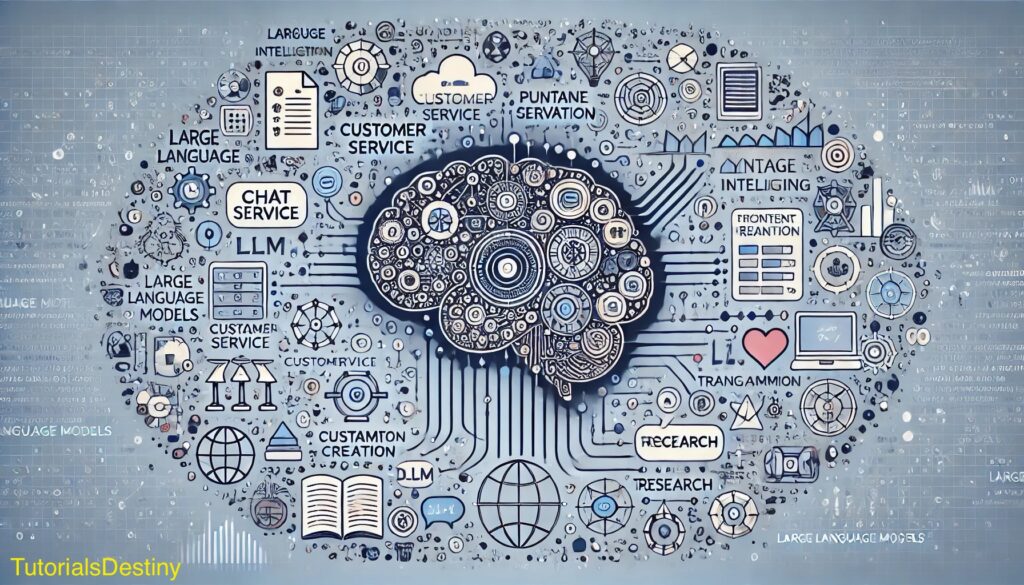
    Large Language Models (LLMs) are advanced artificial intelligence systems designed to understand and generate human language. These models are trained on vast datasets, enabling them to answer questions, write essays, translate languages, and even generate creative content. From OpenAI’s GPT series to Google’s BERT and beyond, LLMs are revolutionizing how we interact with technology.

    What is a Language Model?

    A language model (LM) is a type of AI model that processes and generates human language. Traditionally, language models were limited to simpler tasks like word prediction, but with the growth in computational power and data availability, they’ve evolved into powerful tools. LLMs can process and generate text based on the patterns learned from their training data.

    The “Large” in Large Language Models

    The “large” in LLMs refers to the model’s size, specifically the number of parameters—a model’s internal weights and biases that are learned during training. For instance:

    • BERT by Google has 340 million parameters.

    • GPT-3 by OpenAI has 175 billion parameters.

    • GPT-4 has an even larger number, although OpenAI hasn’t disclosed the exact count.

    This increase in parameters helps the model recognize complex language structures, idiomatic expressions, and context at a very high level.

    How Are Large Language Models Trained?

    The training of LLMs involves two main steps:

    • Data Collection: LLMs are trained on large datasets consisting of text from books, websites, articles, and other sources. This diverse data enables the model to understand a wide range of topics.

    • Learning Patterns: During training, the model learns patterns in the data through a process called “backpropagation,” which adjusts the model’s parameters to minimize errors in predictions.

    The models are then “fine-tuned” to specialize in specific tasks or domains (e.g., customer service, legal assistance).

    Architecture of Large Language Models

    Most LLMs are based on a type of neural network architecture called a transformer.
    Key features of transformers include:

    • Self-Attention: This allows the model to weigh the importance of each word in a sentence relative to others, giving it the ability to capture context effectively.

    • Layers and Multi-Head Attention: LLMs have multiple layers (like neurons in the human brain) that each capture different levels of language complexity, from basic grammar to nuanced semantics.

    Applications of Large Language Models

    LLMs have a wide array of applications:

    • Content Generation: Writing articles, stories, or social media posts.

    • Customer Service: Assisting with FAQs or even handling chatbots.

    • Programming Assistance: Generating code or debugging.

    • Language Translation: Converting text from one language to another.

    • Medical and Legal Research: Summarising research papers or legal documents.

    Limitations of Large Language Models

    Despite their capabilities, LLMs have limitations:

    • Data Bias: Since they learn from existing data, LLMs can inadvertently adopt biases present in the training data.

    • Lack of Real Understanding: LLMs don’t truly understand language; they’re statistical models predicting likely word sequences.

    • High Computational Cost: Training and deploying LLMs require immense computational resources, making them costly to develop and maintain.

    Ethical and Privacy Concerns

    With their power comes the responsibility to use LLMs ethically:

    • Privacy: Models trained on publicly available data may inadvertently learn private information.

    • Misinformation: The ability to generate text on any topic means LLMs could potentially spread misinformation.

    • Job Impact: LLMs could replace certain job functions, particularly those based on routine language processing.

    The Future of Large Language Models

    Looking forward, we expect several advancements:

    • Greater Efficiency: Smaller, more efficient models are being developed to bring LLM capabilities to everyday devices.

    • Better Alignment: Researchers are improving techniques to align LLMs more closely with human values and ethical guidelines.

    • Interdisciplinary Applications: LLMs may become integral in fields like education, healthcare, and law, assisting professionals with decision-making and analysis.

    Conclusion

    Large Language Models represent a significant leap in the field of artificial intelligence. By understanding how they work, their applications, and their limitations, we can better appreciate their impact on society and responsibly leverage their power. Whether you’re an AI enthusiast, a developer, or just curious, LLMs offer a glimpse into the future of human-computer interaction.

    This post gives an overview of what LLMs are, how they work, their applications, and challenges, and where the field might be heading. Let me know if you need any adjustments!

    Start a Free course on Artificial Intelligence Start Course

  • Say Hello to DragGAN – Generative Image Editing AI

    Say Hello to DragGAN – Generative Image Editing AI

    Introduction

    Introducing DragGAN, the latest sensation to captivate the internet following the triumph of chatbots like ChatGPT, Bard, and DALL.E (a revolutionary AI image generation tool). Developed by a collaborative team of researchers from Google, Max Planck Institute for Informatics, and MIT, DragGAN has arrived to revolutionise generative image editing.

    DragGAN: Unleash Your Creative Power with Revolutionary AI Image Editing

    With DragGAN, anyone can effortlessly edit images like a seasoned professional, without the need for complex and cumbersome Photo editing software. This innovative tool, driven by the power of generative AI, allows users to unleash their creativity through a simple point-and-drag interface.

    DragGAN

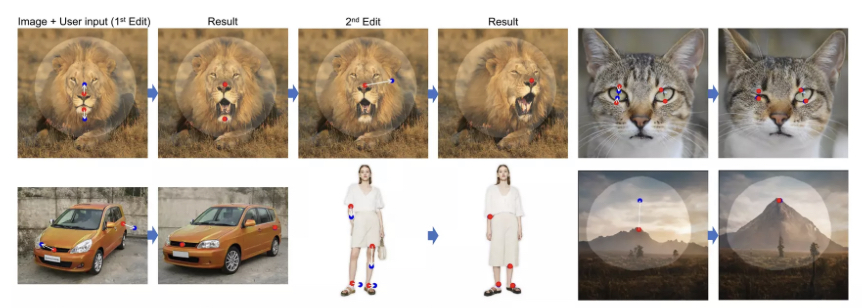
    At its core, DragGAN (Interactive Point-based Manipulation on the Generative Image Manifold) harnesses the remarkable capabilities of a pre-trained GAN. By faithfully adhering to user input while maintaining the boundaries of realism, this method sets itself apart from previous approaches. Gone are the days of relying on domain-specific modeling or auxiliary networks. Instead, DragGAN introduces two groundbreaking components: a latent code optimization technique that progressively moves multiple handle points towards their intended destinations, and a precise point tracking procedure that faithfully traces the trajectory of these handle points. Leveraging the discriminative qualities found within the intermediate feature maps of the GAN, DragGAN achieves pixel-perfect image deformations with unprecedented interactive performance.

    Be ready to embark on a new era of image editing as DragGAN paves the way for intuitive and powerful point-based manipulation on the generative image manifold.

    Its white paper has been released and code will be made public in jun 2023.

    DragGAN Demo

    DragGAN | Author={Pan, Xingang and Tewari, Ayush, and Leimk{\”u}hler, Thomas and Liu, Lingjie and Meka, Abhimitra and Theobalt, Christian},

    DragGAN technique empowers users to effortlessly manipulate the content of GAN-generated images. With just a few clicks on the image, utilising handle points (highlighted in red) and target points (highlighted in blue), our approach precisely moves the handle points to align with their corresponding target points. For added flexibility, users can draw a mask to define the adaptable region (indicated by a brighter area), while keeping the remainder of the image unchanged. This point-based manipulation provides users with unparalleled control over various spatial attributes, including pose, shape, expression, and layout, spanning a wide range of object categories.