Category: Windows

  • Best File Recovery Tools for Windows Users

    Accidentally deleting important files or experiencing data loss can be frustrating. Fortunately, there are numerous file recovery tools available for Windows users to help recover lost or deleted files from hard drives, SSDs, USB drives, and even memory cards. In this article, we’ll explore some of the best file recovery tools for Windows, highlighting their features, pros, and cons.
    1. Recuva

    Recuva is a user-friendly and efficient tool for recovering deleted files. Developed by the makers of CCleaner, it is one of the most popular recovery tools for Windows users.

    Features:

    • Recovers files from hard drives, memory cards, and USB drives.
    • Deep Scan mode for finding deeply buried files.
    • Secure deletion feature for permanently erasing sensitive files.

    Pros:

    • Free version available.
    • Easy-to-use interface suitable for beginners.

    Cons:

    • Limited advanced recovery options in the free version.

    Price: Free, with a Pro version starting at $19.95.

    Download Recuva

    2. EaseUS Data Recovery Wizard

    EaseUS Data Recovery Wizard is a comprehensive tool that supports the recovery of various file types, including documents, videos, and images.

    Features:

    • Recovers files lost due to formatting, accidental deletion, or partition loss.
    • Preview feature to check recoverable files before restoring.
    • Supports recovery from damaged or corrupted drives.

    Pros:

    • Intuitive interface with a step-by-step recovery process.
    • High success rate for file recovery.

    Cons:

    • Free version has a recovery limit of 2 GB.

    Price: Free for up to 2 GB; paid plans start at $69.95.

    Download EaseUS Data Recovery Wizard

    3. Disk Drill

    Disk Drill is a powerful tool that supports over 400 file formats, making it a versatile option for recovering lost files.

    Features:

    • Supports recovery from NTFS, FAT32, exFAT, and other file systems.

    • Includes disk health monitoring and duplicate file detection.

    • Pause and resume recovery scans.

    Pros:

    • User-friendly interface with clear instructions.

    • Free version offers up to 500 MB of recovery.

    Cons:

    • Advanced features are available only in the Pro version.

    Price: Free for up to 500 MB; Pro version starts at $89.

    Download Disk Drill

    4. Stellar Data Recovery

    Stellar Data Recovery is a reliable tool with powerful features designed for both individuals and businesses.

    Features:

    • Recovers data from formatted, corrupted, or encrypted drives.

    • Advanced options for RAID recovery and optical media recovery.

    • Supports a wide range of file types and devices.

    Pros:

    • High compatibility with various storage media.

    • User-friendly interface with customisable recovery options.

    Cons:

    • Free version is limited to 1 GB of data recovery.

    Price: Free for up to 1 GB; plans start at $59.99.

    Download Stellar Data Recovery

    5. MiniTool Power Data Recovery

    MiniTool Power Data Recovery is an effective recovery tool that’s particularly useful for retrieving lost partitions.

    Features:

    • Recovers files from external drives, CDs, and DVDs.
    • Supports recovery of up to 1 GB of data in the free version.
    • Offers a bootable media builder for recovering data from crashed systems.

    Pros:

    • Simple interface for quick recovery.
    • Effective for partition recovery.

    Cons:

    • Limited data recovery in the free version.

    Price: Free for up to 1 GB; plans start at $69.

    Download MiniTool Power Data Recovery

    6. R-Studio

    R-Studio is a professional-grade recovery tool designed for advanced users and IT professionals.

    Features:

    • Supports recovery from networked drives and RAID arrays.
    • Hexadecimal editor for advanced file recovery.
    • Can recover files from severely damaged or formatted drives.

    Pros:

    • Highly customisable recovery options.
    • Supports multiple operating systems, including Windows, Mac, and Linux.

    Cons:

    • Steep learning curve for beginners.

    Price: Starts at $79.99.

    Download R-Studio

    7. PhotoRec

    PhotoRec is an open-source recovery tool designed to recover lost files from hard disks and removable media.

    Features:

    • Recovers over 480 file types.
    • Works well for recovering images, documents, and videos.
    • Available as a free tool.

    • Pros:

    • Free to use with no hidden costs.
    • High success rate for media file recovery.

    Cons:

    • Command-line interface may be challenging for non-technical users.

    Price: Free.

    Download PhotoRec

    How to Choose the Right Tool

    • For Beginners: Recuva and EaseUS Data Recovery Wizard are excellent choices for their ease of use.
    • For Advanced Users: R-Studio and PhotoRec offer professional-level features for complex recoveries.
    • For Multimedia Files: Disk Drill and Stellar Data Recovery are great for recovering images, videos, and audio files.
    • For Budget-Conscious Users: PhotoRec and Recuva (free version) are cost-effective solutions.

    Conclusion

    File recovery tools are essential for rescuing lost data. Whether you’re dealing with accidental deletion, formatting errors, or hardware failure, these tools can help you retrieve your files with ease. Choose the tool that best fits your needs based on file types, recovery complexity, and your level of technical expertise.

    Always remember to back up important files regularly to avoid potential data loss in the future!
  • Windows Keyboard Shortcuts: Boost Your Productivity

    Windows Keyboard Shortcuts: Boost Your Productivity

    Why Use Windows Keyboard Shortcuts?

    In today’s fast-paced digital world, efficiency matters more than ever. Whether you are a student preparing assignments, a teacher creating notes, an office professional handling documents, or a casual computer user browsing the internet, the way you interact with your computer can significantly impact your productivity. One of the simplest yet most powerful ways to work faster on a Windows computer is by using keyboard shortcuts.

    Keyboard shortcuts are combinations of keys that perform specific actions instantly. Instead of navigating through menus or relying heavily on a mouse, you can complete tasks with just a few keystrokes. Over time, these shortcuts become muscle memory, allowing you to work smoothly and effortlessly.

    Using keyboard shortcuts reduces your reliance on the mouse, enabling you to navigate, manage files, and perform tasks more efficiently. This not only saves time but also minimizes unnecessary hand movement, which can reduce fatigue and repetitive strain injuries. Many professionals who spend long hours on computers prefer keyboard shortcuts because they make work faster, cleaner, and more precise.

    Another major advantage of keyboard shortcuts is consistency. Most shortcuts work across multiple applications—text editors, browsers, file managers, and even professional software. Once you learn them, you can apply the same skills everywhere, making you a confident and power user of Windows.

    Below are some essential Windows keyboard shortcuts, carefully grouped by category, to help you boost productivity and take full control of your system.

    General Shortcuts

    General keyboard shortcuts are the foundation of everyday computer use. These shortcuts work across most Windows applications and are essential for tasks such as editing text, managing files, and navigating documents.

    For example, copying and pasting text is something almost everyone does daily. Using Ctrl + C, Ctrl + X, and Ctrl + V allows you to move information instantly without opening menus. Similarly, undo and redo shortcuts help you quickly fix mistakes, which is especially useful while writing, designing, or coding.

    These shortcuts are universal and should be the first ones every Windows user learns.

    Ctrl + CCopy selected item(s) to the clipboard
    Ctrl + XCut selected item(s) to the clipboard
    Ctrl + VPaste item(s) from the clipboard
    Ctrl + ZUndo the last action
    Ctrl + YRedo the last action
    Ctrl + ASelect all items in a document or window
    Ctrl + SSave the current document or file
    Ctrl + NOpen a new window or document
    Ctrl + FOpen the “Find” window to search for text
    Ctrl + PPrint the current document
    Alt + TabSwitch between open windows or applications
    Alt + F4Close the active window or application
    Ctrl + Alt + DelOpen the security options menu
    Ctrl + Shift + EscOpen Task Manager directly

    Why these shortcuts matter:

    • They reduce errors by giving you better control.
    • They save seconds on each task, which adds up to hours over time.
    • They work almost everywhere—Word, Excel, browsers, and even basic apps.

    Mastering these shortcuts alone can dramatically improve your day-to-day workflow.

    Taskbar Shortcuts

    The Windows taskbar is the control center of your desktop experience. Taskbar shortcuts allow you to open applications, manage windows, and access system tools without leaving your keyboard.

    For instance, pressing Windows Key + E instantly opens File Explorer, saving you multiple clicks. Windows Key + D is incredibly useful when your screen is cluttered with open windows—you can instantly show or hide the desktop.

    These shortcuts are especially helpful when multitasking or working with multiple applications simultaneously.

    Windows Key + EOpen file explorer
    Windows Key + DShow or hide the desktop
    Windows Key + TabOpen Task View to switch between open windows
    Windows Key + ROpen the Run dialog box
    Windows Key + MMinimise all windows
    Windows Key + Shift + MRestore minimised windows
    Windows Key + LLock your computer to ensure security
    Windows Key + TCycle through taskbar applications
    Windows Key + Number (1-9)Open corresponding app pinned to the taskbar based on its position

    Practical use case:

    If you pin your most-used apps (browser, Word, Excel) to the taskbar, you can open them instantly using Windows Key + number, without touching the mouse.

    Virtual Desktop Shortcuts

    Virtual desktops are one of Windows’ most underrated features. They allow you to create multiple desktops for different tasks—work, study, browsing, or entertainment—without cluttering a single screen.

    Using keyboard shortcuts makes managing virtual desktops fast and seamless.

    Windows Key + Ctrl + DCreate a new virtual desktop
    Windows Key + Ctrl + F4Close the current virtual desktop
    windows Key + Ctrl + ⬅️/ ➡️ Switch between virtual desktops

    Why virtual desktops improve productivity:

    • Separate work and personal tasks
    • Reduce distractions
    • Keep related applications grouped together

    For example, you can keep your browser and notes on one desktop and design or coding tools on another.

    Accessibility Shortcuts

    Windows offers excellent accessibility features to help users with visual, auditory, or motor challenges. These keyboard shortcuts make Windows easier to use for everyone, not just those with disabilities.

    Windows Key + U
    Open the Accessibility settings.
    Windows Key + + (Plus)
    Open the Magnifier to zoom in
    Windows Key + – (Minus)
    Zoom out using the Magnifier
    Windows Key + Enter
    Open the Narrator
    Windows Key + Ctrl + C
    Turn colour filters on or off
    Shift + 5 (Num Lock)
    Enable/disable Mouse Keys for moving the cursor with the numeric keypad.

    Who benefits most:

    • Users with low vision
    • Elderly users
    • Users with limited mouse control

    These shortcuts show how Windows prioritizes inclusivity and ease of access.

    Browser Shortcuts

    Web browsers are among the most used applications on any computer. Browser shortcuts help you navigate faster, manage tabs efficiently, and focus on content.

    Ctrl + T
    Open a new tab
    Ctrl + W
    Close the current tab
    Ctrl + Shift + T
    Reopen the last closed tab
    Ctrl + Tab
    Switch to the next tab
    Ctrl + Shift + Tab
    Switch to the previous tab
    Ctrl + L
    Focus the address bar
    F11
    Enter or exit full-screen mode

    Why browser shortcuts are essential:

    • Ideal for research and study
    • Helps manage multiple tabs efficiently
    • Saves time while searching and browsing

    Students and professionals who research online daily will find these shortcuts extremely valuable.

    Advanced System Commands

    Advanced system shortcuts give you quick access to system-level settings and tools. These are particularly useful for power users, IT professionals, and advanced learners.

    Windows Key + Pause/Break
    Open the System Properties window
    Windows Key + I
    Open the Settings menu
    Windows Key + X
    Open the Quick Link menu (right-click Start menu)
    Windows Key + Shift + S
    Take a screenshot of a selected area using the Snipping Tool
    Windows Key + P
    Switch display modes (e.g., duplicate, extend, or second screen only)
    Windows Key + Space
    Switch input language or keyboard layout

    These shortcuts allow you to troubleshoot issues, manage displays, and customize your system without navigating complex menus.

    Conclusion

    Keyboard shortcuts are not just tricks for advanced users—they are essential tools for anyone who wants to use Windows efficiently. Learning shortcuts is an investment that pays off every single day by saving time, reducing effort, and improving accuracy.

    You don’t need to memorize everything at once. Start with a few shortcuts that match your daily tasks. As they become second nature, gradually add more to your skill set.

    Start small—pick a few keyboard shortcuts to learn each week. Once they become second nature, add more to your repertoire. With practice, you’ll wonder how you ever worked without them!

  • BIOS setup and OS installation

    BIOS Settings and OS installation

    BIOS Setup

    After successful installation of the machine power on the system.

    You will be launched into the BIOS of the System. Different motherboards have slightly different BIOS setups.

    In the BIOS you can set up your fans speed, change boot order, overclock your system and know your hardware information.

    Selection of Operating System

    You can select your system OS from many available Operating Systems (Windows, Unix, Linux etc).

    Windows is the most popular OS.

    Here I will show you how to install Windows on your Internal Disk.

    First of all change boot order from BIOS settings, set USB hard disk on first priority.

    OS Installation 

    Next, prepare a Windows bootable USB.

    Requirements:

    Here I will explain one of the Bootable USB creating tool 

    “Rufus” .

    In the rufus selection box, select the USB drive for OS installation in the “device ” selection box.

    In the “Boot selection” option select the windows iso image file.

    In the “partition system” select GPT or MBR depending upon your BIOS

    Morden BIOS supports the GPT partition system and older ones support the MBR partition system. 

    After all the necessary setups  click on the ready button, wait for some time to complete the process and then safely remove the USB drive.

    Insert USB drive in any of the available USB ports, and follow the installation instructions.

    • Select language and keyboard format.
    • Accept license terms.
    • Select type of installation: upgrade or custom

    Select “custom” for fresh installation.

    Select “upgrade” for upgrade to a new version and keep data from your previous installation.

    • Select installation partition.

    If  you are installing windows for the first time you may have to create partitions.

    Or if you are upgrading from the lower version you will see a list of predefined partitions. If any of the partitions hold any important data do not format or delete them otherwise you will lose the stored data.

    • Installing windows.

    After selection of the windows partition final installation begins. Wait for some time to complete installation.

    When windows restart remove the USB drive or you will again boot into the windows installation process.

    Now the window will set up necessary features and settings to keep it running, wait and follow onscreen instructions.

    Step1: Choose your PC Hardwares.

    Step 2: Hardware installation.

  • Sync Google Drive With Your Computer

    Sync Google Drive With Your Computer

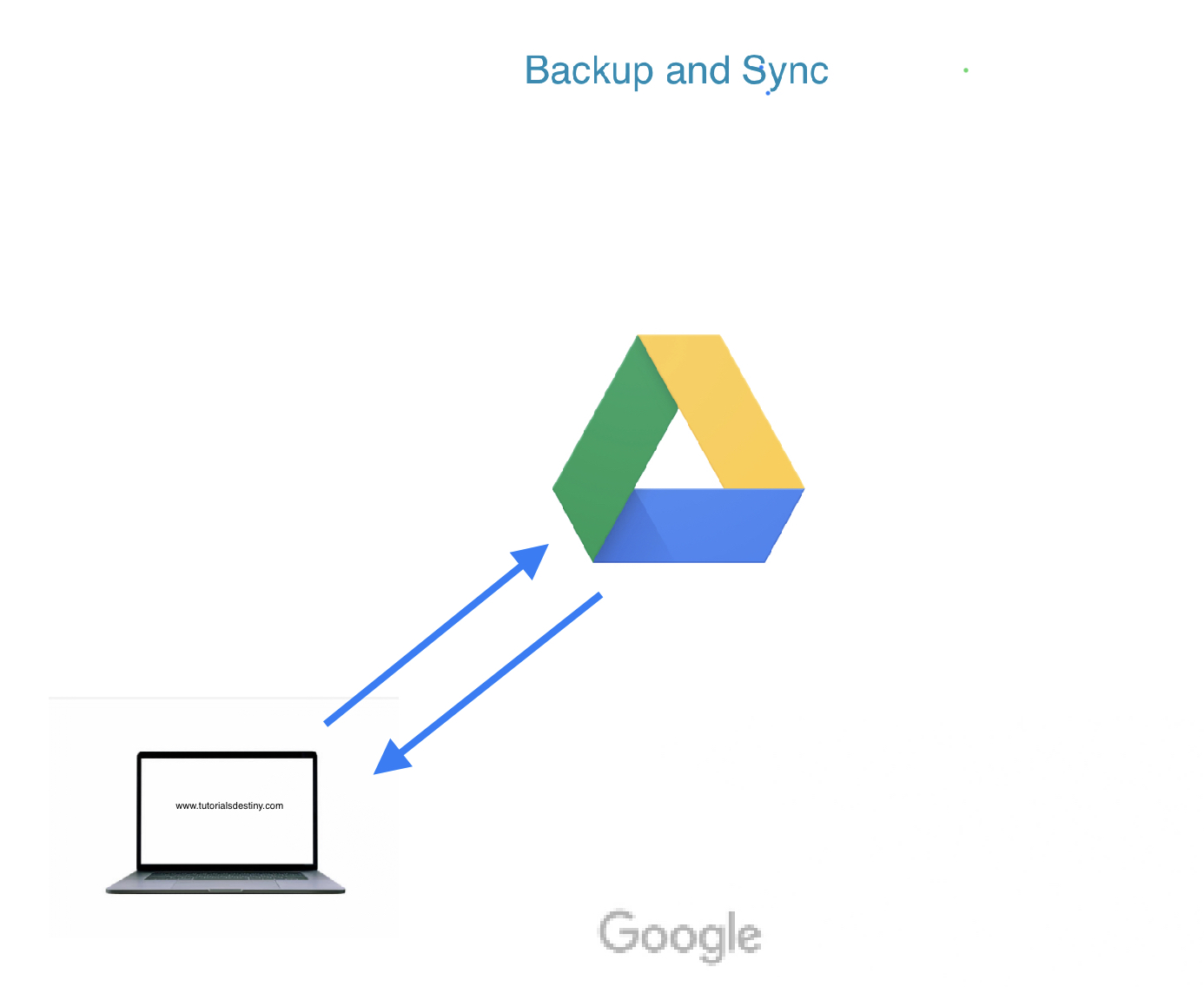
    Backup And Sync

    Google Drive is one of the most popular cloud storage platforms, widely used by people across the globe. It provides 15 GB of free cloud storage to registered users, allowing them to store a variety of data such as media files, images, PDFs, and more.

    Google Drive’s 15 GB storage is shared across other Google services, including Gmail and Google Photos. However, in Google Photos, if you upload photos under the ‘High Quality (unlimited storage)’ option, these uploads won’t count against your 15 GB limit.

    Benefits of Storing Files in the Cloud

    Data Security: Your files remain safe even if you lose your local storage device.

    Accessibility: You can access your files from anywhere in the world by logging into your Google account, with world-class security provided by Google.

    How to Sync Google Drive With Your Computer ?

    If you’re using Google Drive as your primary cloud storage, having a local offline copy of your Drive folders on your computer can provide additional security and enable easy file access across multiple devices.

    Here’s how to sync Google Drive with your computer:

    Step 1: Download and Install Backup and Sync

    First, download Google’s Backup and Sync application from the official website:

    Download Backup and Sync

    Once downloaded, install the application on your computer.

    Step 2: Log In to Your Google Account

    After installation, log in to the Google account associated with your Drive.

    Step 3: Set Up Computer Folder Backup

    In this step, you can select the folders on your computer that you want to back up to Google Drive.

    • If you’re using the free 15 GB plan, avoid selecting large folders to prevent running out of storage.

    • For photos and videos, choose:

    1. High Quality (Unlimited Storage): This option does not count against your free 15 GB storage.
    2. Original Quality: This option will use your Drive storage, so it’s suitable if you have purchased additional storage.

    Step 4: Set Up Google Drive Sync Preferences

    Here, you can choose whether to sync all files from your Google Drive or only specific folders to your computer.

    Once your preferences are set, click OK to complete the setup. Now, your Google Drive and computer will seamlessly sync.

    Managing Sync Settings

    If you wish to change your settings later:

    1. Open the Backup and Sync application by searching for it on your computer.

    2. Update your backup and sync preferences as needed.

    Upgrading Google Drive Storage

    If you need more storage space, you can upgrade your plan. Visit Google One to explore available storage plans.

    Conclusion

    Syncing Google Drive with your computer ensures your files are backed up, easily accessible, and safe. Whether you’re using the free plan or a paid one, Google Drive provides a secure and reliable way to store your important files both locally and in the cloud.

  • Partition A Window’s Drive

    Partition A Window’s Drive

    Partition a Windows Drive After Installation

    Partitioning a drive in Windows is usually done during the installation of the operating system. At that stage, a large hard drive is divided into two or three smaller drives as per requirement.

    But what if you want to partition your drive later? Fortunately, this can still be done using:

    1. Windows’ built-in Disk Management utility, or
    2. Free third-party software.

    In this guide, I’ll walk you through partitioning a drive after installation using a popular freeware tool called MiniTool Partition Wizard.

    You can download it here: MiniTool Partition Wizard

    Step 1: Install and Launch the Tool

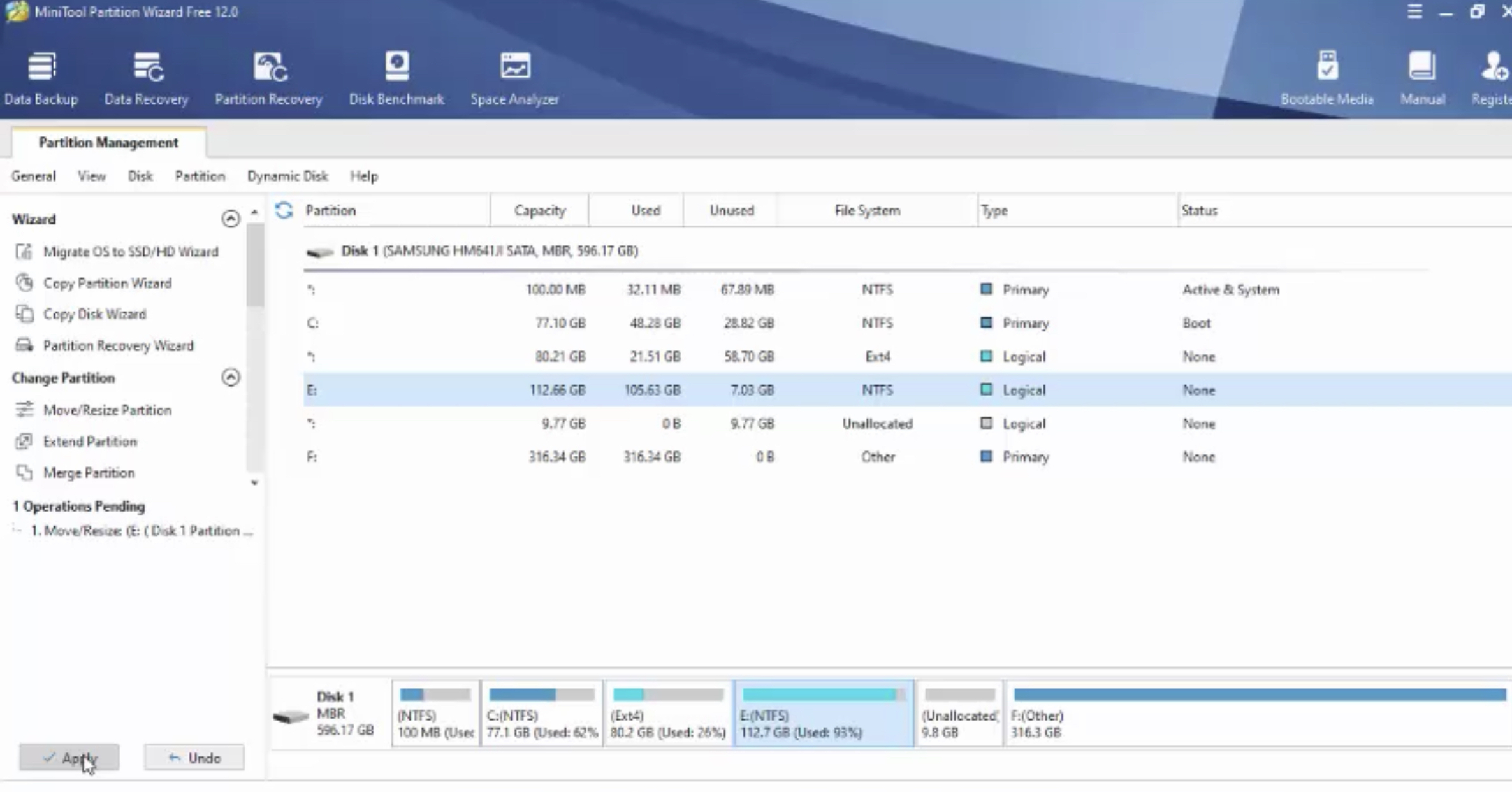
    After downloading and installing, launch the software. You’ll see the following screen with all available drives displayed.

    Step 2: Select the Drive to Resize

    • Right-click on the drive you want to partition.
    • Select Move/Resize.

    Now, drag the slider to shrink the current drive and create unallocated space.

    ⚠️ Important: Resize only up to the blank (free) space. If you shrink beyond the available free space, you risk data loss.

    👉 Example: My E Drive is 122 GB in total, with 105 GB used. This means I can safely shrink it by about 17 GB (122 − 105). For safety, I left a bit more space unused.

    Step 3: Apply the Changes

    • Once you’ve adjusted the drive size, click OK.
    • Then click Apply (bottom-left corner).
    • Wait for the tool to process. You’ll now see unallocated space just after the resized drive.

    Step 4: Create a New Partition

    • Right-click on the unallocated space.
    • Select Create.

    Here you can:

    • Label the partition with any name (optional).
    • Choose partition type:
      • Primary → Used for system/bootable partitions.
      • Logical → Best for storing data. (I chose Logical in this example.)
    • Assign a drive letter (make sure it’s not already in use).
    • File system → Select NTFS (default for Windows).
    • Cluster size → Leave it as default.

    Double-check everything, click OK, then click Apply again to finalize the changes.

    Step 5: Wait and Finish

    After the process completes, you’ll have a brand-new drive ready for use. You can now store files such as photos, videos, documents, and more.

    Increase the Size of a Partition

    Sometimes you may want to increase the size of a partition instead of creating a new one. This is possible if there is unallocated space available next to the partition.

    Here’s how to do it:

    1. Locate unallocated space: Make sure the unallocated space is directly next to the partition you want to extend.
    2. Right-click on the target partition → Select Move/Resize.
    3. Drag the slider to merge the unallocated space into your partition.
    4. Click OK, then Apply to confirm the changes.
    5. Wait for the process to complete. Your partition will now have increased space.

    ⚠️ Note: If the unallocated space is not adjacent to your partition, you may need to move/resize other partitions to make it contiguous.

    💡 That’s it! You’ve now learned how to create a new partition and also increase the size of an existing partition in Windows using MiniTool Partition Wizard.

    For any suggestions or questions, feel free to drop them in the comment section below.